
Barcelona caught me off guard. When I went for the fist time I was expecting another busy European city and came out thinking about when I could go back (or move in!).
The city also suits different travel styles. You can line up tickets for the Sagrada Família and Park Güell or spend your time wandering markets and side streets. Both ways feel like time well spent.
The metro is dead simple and most of the center is walkable, so you don’t spend half your trip figuring out logistics.
Four days is the sweet spot if you ask me. Enough to see what you came for and still have time to sit somewhere, order something you can’t pronounce and just watch the city do its thing.
Most big tourist cities feel a bit hollow once you get past the main spots. Barcelona doesn’t really do that. The neighborhoods still feel lived in, people are going about their day and you’re just kind of moving through it.
What Makes Barcelona Worth the Trip
- Gaudí’s architecture is everywhere. The Sagrada Família has been under construction since 1882 and is still not finished. Park Güell sits above the city with wide views and Casa Batlló on Passeig de Gràcia has one of the most distinctive facades you’ll see.
- The old town is legitimately old. The Gothic Quarter has Roman walls, a 14th century cathedral and streets that predate most cities on the continent. La Rambla runs straight from the center down to the port.
- The food scene is the real deal. Gràcia has tapas bars that have barely changed in decades. Barcelona also has some of Spain’s best Michelin-starred restaurants. Catalan cooking is ingredient-driven and unfussy.
- The weather is easy to work with. Winter days usually hit 13 to 15°C and summer tops out around 28°C, so it’s comfortable for walking year-round without much planning around the heat.
- Day trips are genuinely easy. Montserrat and Sitges are about an hour by train. Parts of the Costa Brava are 1.5 to 2 hours away depending on where you’re headed.
How Many Days Do You Need in Barcelona
Guidebooks often toss out numbers without context, but your ideal stay really depends on your intentions.
If you’re focused solely on the main attractions, two days is doable but you’ll be rushing. You’d need to pre-book everything and basically run from the Sagrada Família to Park Güell to the Gothic Quarter with no real downtime. That pace is not for everybody!
Three days tends to strike a healthy balance. Enough to see the main things, eat well and not feel wrecked by the end of it.
Four days is what I’d recommend for a first trip. You get the sights plus time to just walk around with no particular plan.
Five to seven days if you want day trips or a slower pace. Montserrat, Sitges, a few long lunches. That kind of trip.
In most cases, three to four days and you’ll leave feeling like you actually saw the city rather than just survived it.
Best Time to Visit
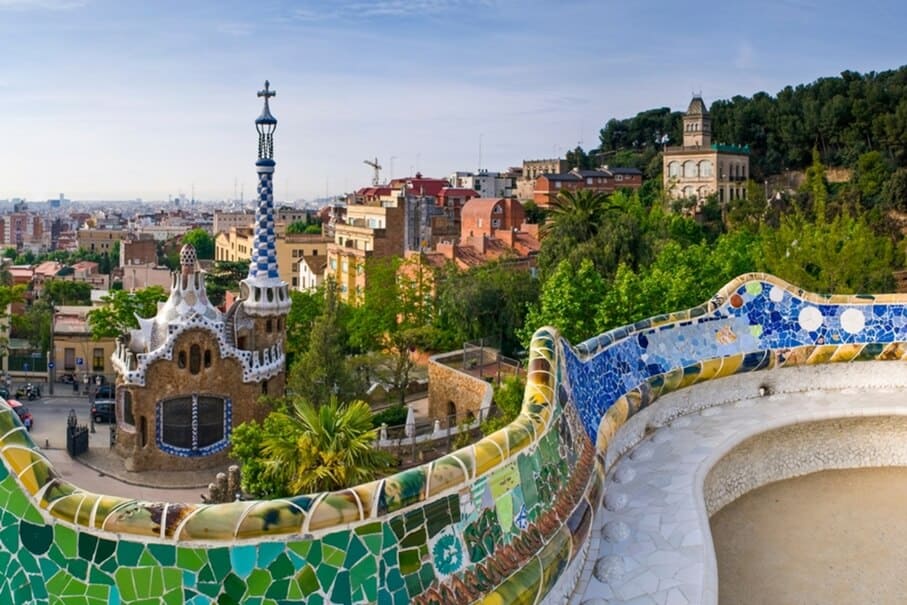
Spring (April to June) and fall (September to October) are the best times to go. Temperatures are comfortable, the city is busy but not overwhelming and you can actually enjoy being outside.
Summer is rough. July and August are hot and packed. Lines at the main sights get long and La Rambla and Park Güell feel more like a crowd management exercise than a visit.
September is a sweet spot if you can only go in the second half of the year. The weather is still warm and La Mercè festival happens late September, which fills the city with free concerts and street events.
June has Primavera Sound if you’re into music festivals. It pulls big crowds but it’s worth it if that’s your thing.
Winter is quieter and cheaper. December to February hotels drop in price and you can actually walk around without being shoulder to shoulder with tourists. It’s cooler but still fine for sightseeing.
If budget matters, winter. If weather and atmosphere matter most, go in May or October.
How Barcelona Fits Into a Spain Itinerary
Barcelona works well as either the start or the end of a Spain trip. High-speed trains get you to Madrid in about 2.5 to 3 hours, so combining both cities is straightforward and doesn’t eat up much travel time.
Most people spend three to four days here before moving on. That’s usually enough to feel like you actually saw the city rather than just passed through it.
Day trips let you see more of Catalonia without the hassle of constantly checking in and out of hotels. For most people that’s the better move over splitting your trip between multiple bases.
If you have four or five days, take on a day trip to Montserrat, Girona or Sitges before heading south. You won’t need to change hotels and it breaks things up nicely.
Barcelona connects easily to pretty much anywhere in Spain. Trains, buses and flights all run regularly, so it doesn’t matter much whether you’re heading to Seville, San Sebastián or somewhere in between.
Where to Stay (Neighborhoods)
The neighborhood you pick changes the whole feel of the trip, so it’s worth thinking about before you book.
La Dreta de l’Eixample is central, walkable and close to most of the Gaudí stuff. It’s on the pricier side, hotels usually run $200 to $300 a night, but the location does a lot of the work for you.
Gràcia feels the most like a proper neighborhood. Smaller streets, local bars, plazas where people actually sit and hang out. You can find places for around $80 on the low end up to $400 for something nicer.
El Born is good if you want to be near the Gothic Quarter but with a bit more going on at night. Gothic streets, independent shops, decent restaurant scene. Mid-range hotels sit around $200 to $300, luxury goes up to $500.
The Gothic Quarter is the most central option and puts you right in the middle of the old town. You’re walking distance from basically everything, which is great, but it’s also the noisiest area at night. Good pick if location is your priority and you don’t mind the buzz after dark. Hotels run around $150 to $350 depending on the property.
Sant Antoni is the one that feels least touristy. It’s calm, mostly residential and has a good local market. Hotels run roughly $150 to $350 depending on what you’re after.
If it’s your first time, Eixample or El Born are the easiest picks. If you’ve been before and want something that feels less like a tourist bubble, go for Gràcia or Sant Antoni.
More hotel types in Barcelona:
What to Pack for Barcelona
What you need depends almost entirely on when you’re going.
Summer (June to August): Light breathable clothes, good walking shoes and sunscreen are the essentials. A small crossbody bag is worth it over a backpack, it’s easier to manage in crowds and harder to get into, which matters on La Rambla.
Winter (December to February): A decent mid-weight jacket is enough, you don’t need a heavy coat. Layers work better than one bulky thing. Comfortable shoes still apply, the streets don’t change. An umbrella or packable rain jacket is worth throwing in since winter does bring some rain.
What to leave at home
- A big suitcase if you’re only staying four or five days, a carry-on is plenty and easier on the metro
- Formal shoes, you won’t need them unless you have a specific dinner planned
- Too many “just in case” outfits, Barcelona has shops if you forget something
- A money belt, they’re overkill, just keep your phone and cards in a front pocket or crossbody bag
Read my full guide on what to pack for Barcelona in Spring.
Who Should Skip Barcelona
Barcelona is great but it’s not the right trip for everyone.
If you’re after quiet and nature, this isn’t it. The city is loud in places and there’s always something going on. That’s the appeal for most people but if you wanted a slow retreat it’ll probably feel like too much.
You’re also going to walk a lot. Plazas, museums, long streets between neighborhoods. If that’s not something you’re up for physically, it gets tiring quickly.
Avoid summer if you hate crowds. July and August at Park Güell or La Rambla can be genuinely unpleasant. Long lines, packed streets, that feeling of being shuffled along with everyone else.
If architecture and art don’t do much for you, the biggest draws here will probably fall flat. Gaudí is everywhere and a lot of the city’s identity is built around design and history. Without that interest it’s harder to get much out of it.
And if you’re burned out on city life and want a break from it, Barcelona won’t give you that. It’s busy, it’s urban and it doesn’t really have an off switch.
